Advertisement: This page contains affiliate links to Amazon.de. As an Amazon Associate, we earn from qualifying purchases. The price does not change for you.
AI notice: This page was translated with AI from the German original.
PG vs VG: Which Mixing Ratio Is Ideal for You?
Flavour, vapour, throat hit: how PG and VG shape your vaping experience and which ratio suits your device and style.
The question of PG vs VG is one of the most important when you are looking for the right e-liquid for your e-cigarette. The mixing ratio of propylene glycol (PG) and vegetable glycerine (VG) determines how intense the flavour is, how much vapour is produced, how strong the throat hit is and how well the e-liquid suits your device.
In this guide we not only explain what PG and VG are, but also help you decide which ratio is ideal for you. Whether you are a beginner with a pod system, someone switching from cigarettes or an experienced vaper, by the end you will know exactly which e-liquid to buy. You will also find a compact side-by-side comparison in our PG vs. VG comparison.
Neither, it depends on your vaping style. PG delivers stronger flavour and throat hit, VG produces more vapour and a smoother draw. For most beginners and pod systems, a 50/50 e-liquid is the best choice. MTL vapers benefit from more PG, DTL vapers from more VG.
What are PG and VG? A quick explanation
At its core, every e-liquid consists of two carrier substances that together make up the main part of the e-liquid. Flavourings and, optionally, nicotine are added to these. The two carrier substances have very different properties:
Propylene glycol (PG)
PG is thin, almost flavourless and an excellent flavour carrier. It produces the so-called throat hit, the slight scratch in the throat that many people switching from cigarettes know and appreciate. PG produces less visible vapour, which can be an advantage for discreet vaping. In the food industry, PG is used as the additive E1520.
Vegetable glycerine (VG)
VG is viscous, slightly sweet and generally produces more vapour than PG. The draw is softer and gentler, and the throat hit weaker. VG is thicker, which means it flows into the coil more slowly, an important factor when choosing a device. VG is obtained from vegetable fats and is also approved as a food additive (E422).
PG vs VG: the differences at a glance
| Feature | PG (propylene glycol) | VG (glycerine) |
|---|---|---|
| Flavour | Intense, clearer flavour | Slightly sweet, somewhat more muted |
| Vapour volume | Less vapour | Much more vapour |
| Throat hit | Strong, similar to a cigarette | Smooth, barely noticeable |
| Consistency | Thin | Viscous, thick |
| Coil load | Low | Higher (gunks up faster) |
| Ideal for | MTL devices, pod systems | DTL devices, sub-ohm |
Which ratio for which vaping style?
The common mixing ratios and who they suit:
PG delivers more intense flavour. Propylene glycol is a better flavour carrier than glycerine. E-liquids with a higher PG content (e.g. 50/50 or 60/40) generally taste clearer and more nuanced. High-VG e-liquids taste somewhat more muted and slightly sweet.
VG produces much more vapour. Vegetable glycerine produces denser, bigger vapour clouds than PG. If you want a lot of visible vapour, choose an e-liquid with at least 70% VG. For discreet vaping, a higher PG content is better.
PG/VG and your device: what goes together?
The mixing ratio has to suit your device, otherwise you risk poor flavour, wicking problems or a burnt coil. Here is the most important rule:
Rule of thumb: The smaller the liquid channels in the coil, the thinner the e-liquid has to be. Pod systems and MTL devices need 50/50 or high PG. Sub-ohm devices can handle and prefer high-VG e-liquids.
- Pod systems (MTL): 50/50 up to a maximum of 60VG/40PG. With most pods, higher VG content leads to wicking problems: the coil does not get enough e-liquid and tastes burnt.
- AIO devices (RDL): 50/50 to 70VG/30PG. These devices have larger wicking openings and also cope with somewhat thicker e-liquids.
- Sub-ohm tanks (DTL): 70VG/30PG to Max VG. The large coils and wicking openings need thick e-liquid. Thin 50/50 would leak and spit here.
You can find out more about the difference between the puff techniques in our guide MTL vs. DTL vaping.
Our recommendation: the best devices for 50/50 e-liquids
Most beginners and people switching from cigarettes vape with 50/50 e-liquids, and for that you need an MTL pod system that works well with this mixing ratio. These three devices are our current favourites for 50/50 vapers:
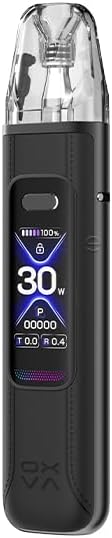
OXVA Xlim Pro 3
Designed for MTL vaping. Adjustable airflow and a 1,500 mAh battery. For flavour-focused vapers.
Read the full review → Check price on Amazon →
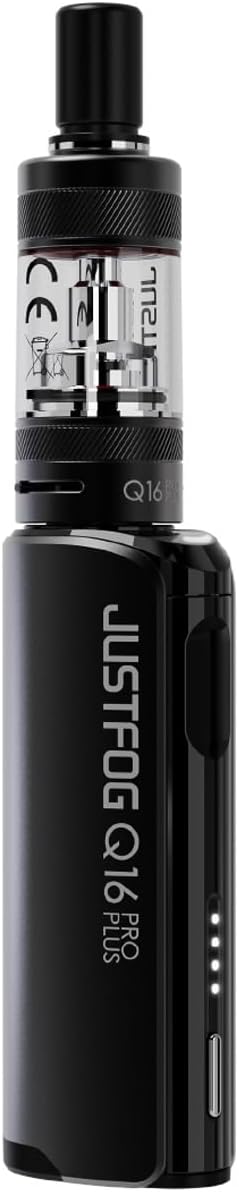
JustFog Q16 Pro Plus
The classic among MTL devices. Excellent for 50/50 and even 60PG/40VG. A tight, cigarette-like draw. Ideal for people switching from cigarettes.
To the detailed review → Check price on Amazon →
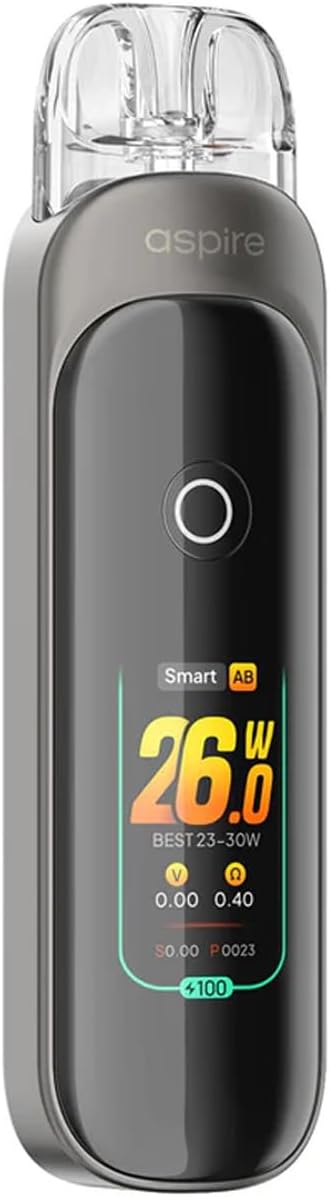
Aspire Pixo
Compact, inexpensive and optimised for 50/50 e-liquids. An ideal start for price-conscious vapers who prefer MTL.
Read the full review → Check price on Amazon →You will find more devices in our e-cigarette overview or specifically in the pod systems category.
PG/VG and nicotine salts: what goes together?
Nicotine salt e-liquids are offered almost exclusively as a 50/50 mix, and there is a good reason for that. Nicotine salts are designed for MTL devices, which work best with thin e-liquid. The combination of 50/50 and nicotine salt delivers:
- Fast nicotine absorption (as with a cigarette)
- A smooth throat hit despite a high nicotine strength (20 mg/ml)
- Optimal wicking in pod systems
- Good flavour without overloading the coil
If you are just switching, the combination of 50/50 + nicotine salt + pod system is the safest route to a satisfying vaping experience. More on this in our switching guide.
PG/VG and coil life
The mixing ratio directly affects how long your coil lasts. VG is thicker and leaves more residue on the heating coil. That means:
- 50/50 e-liquids: The coil usually lasts 1 to 3 weeks, longer than with high-VG e-liquids
- 70/30 (VG/PG): The coil often lasts only 1 to 2 weeks, as VG gunks up faster
- Max VG: Shortest coil life, especially with sweet flavours
If you want to maximise coil life, you are best served by 50/50 e-liquids and regular device maintenance.
Found your e-liquid? Now find the right device to go with it
Find the pod system that suits your e-liquid type best.
Frequently asked questions about PG and VG (FAQ)
What is better for beginners: PG or VG?
For beginners we recommend a 50/50 e-liquid (equal parts PG and VG). It offers a good balance of flavour, throat hit and vapour volume and works with most beginner devices such as pod systems. Pure PG or pure VG e-liquids do not make sense for beginners.
Which PG/VG ratio for pod systems?
A 50/50 e-liquid is optimal for pod systems. Some pods can also handle 60VG/40PG, but higher VG content often leads to wicking problems and gunked-up coils. Check your device’s instruction manual for the recommended mix.
Is PG or VG more harmful?
Both substances are approved as food additives (PG as E1520, VG as E422). Long-term studies on inhalation are limited. Some people are sensitive to PG (throat irritation, dry mouth). In that case, a higher VG content can help. We make no health promises.
Can I mix PG and VG e-liquids?
Yes, you can mix e-liquids with different PG/VG ratios to get a custom ratio. Be aware that the nicotine strength is diluted in the process. For beginners, however, we recommend simply buying a ready-mixed e-liquid in the ratio you want.
Why does my e-liquid scratch my throat?
The scratchiness (throat hit) comes mainly from the PG content and the nicotine strength. If it scratches too much, try an e-liquid with a higher VG content (e.g. 60VG/40PG instead of 50/50) or reduce the nicotine strength. At the same strength, nicotine salts scratch much less than freebase nicotine.
Conclusion: which PG/VG ratio should you choose?
The answer to PG vs VG depends on your device, your vaping style and your preferences. For the vast majority of beginners and people switching from cigarettes, 50/50 is the right starting point: balanced and compatible with devices.
If you want more throat hit, go for 60PG/40VG. If you prefer huge vapour clouds, choose 70VG/30PG or higher, but then you also need a suitable sub-ohm device. The combination of nicotine salt, 50/50 e-liquid and a good pod system is an obvious route for people switching from cigarettes.
This article contains affiliate links. Learn more.